
NuNet
NuNet review. SingularityNET-spinout compute orchestration on Ethereum and Cardano. 32-device mainnet live since March 2026, four-year audit gap, $3M cap, the architecturally honest end of the DeAI compute shelf.
The architecturally honest end of the DeAI compute shelf. Apache 2.0 across the orchestration stack, multi-chain settlement on Ethereum, Cardano and BSC, and a mainnet that publishes its actual device count instead of an inflated one. The cost of that honesty is a microcap valuation, an audit four years and eight months old, foundation-only governance, and a token whose design accommodates its own substitution by stablecoins.
- + Apache 2.0 orchestration stack with multi-chain NTX settlement on Ethereum, Cardano and BSC
- + Reciprocally announced production work with Auki/Posemesh (spatial computing) and Serverista (data-centre VMs)
- + Fixed 1B supply with 86.57% already circulating; next unlock is 0.25% of supply in June 2026
- − Only public audit is Hacken September 2021 token-contract review; orchestration protocol shipped to mainnet unaudited
- − Foundation-only governance; on-chain liquid-democracy voting is roadmap, not deployed
- − $3M market cap with thin daily volume; ATL set 5 May 2026, nine days before this review
47/100 reflects an architecturally honest, fully open-source compute orchestration protocol shipped with too-small scale, too-stale audit coverage and foundation-only governance. The codebase and multi-chain settlement model are genuine; the dashboard transparency and on-chain voting are not yet.
Infrastructure decentralisation10/20
Device onboarding is permissionless: anyone can install the open-source NuNet Appliance and join the libp2p mesh. Settlement runs across Ethereum, Cardano and BSC, so no single chain is a single point of failure. The Logical Orchestration Layer (matching engine) is a single foundation-operated reference implementation, however, and the network's verified size of 32 devices is too small to demonstrate geographic or organisational distribution. Apache 2.0 across the DMS means anyone could fork the matching engine, but no alternative implementation exists.
Governance decentralisation5/20
All current decisions sit with the NuNet Foundation and Technical Council. No on-chain voting, no public proposal register, no treasury transparency. The Phase 2 'liquid democracy' model is on the roadmap but not deployed; mainnet shipped on 2 March 2026 without it. Better than fully-team-controlled DePIN peers because the dual-entity structure (Foundation governance + Solutions operations) at least separates protocol stewardship from commercial interest.
Token distribution fairness6/15
Insider allocation totals 39.25% (team & advisors 16.25%, private 14.40%, backers 6%, seed 2.60%). R&D reserve at 21% is unusually large and represents future foundation-controlled release with no public schedule. Community-allocated supply (community round 10% + community rewards 9% + mining rewards 15.25%) totals 34.25% which is reasonable for a DePIN. SingularityNET Foundation retains 495,000 NTX from the 2021 spin-out (negligible at 0.05% of supply). The token launched via IDO and launchpad rounds rather than fair launch.
Censorship resistance9/15 Established
Apache 2.0 codebase means the DMS can be forked and run by anyone. libp2p P2P mesh has no central relay. Multi-chain settlement (Ethereum + Cardano + BSC) means a single chain censoring NTX transactions still leaves alternatives. No KYC required for device participation. The Foundation could choose to disable its reference matching engine, but the protocol's open-source nature limits the blast radius of any single foundation action.
The NTX token can be frozen or its issuance controlled by a central admin (token-layer custody surface). source →
The Ethereum NuNetToken is PAUSABLE: PAUSER_ROLE can call pause() and ERC20Pausable's whenNotPaused guard on _beforeTokenTransfer freezes ALL transfers globally (no owner carve-out; currently paused()=false). PAUSER_ROLE and DEFAULT_ADMIN_ROLE are both held by the single deployer EOA 0x863f13e5b505f1eb17803b94ec9d3daf80092165, un-renounced. There is NO per-address blacklist and NO fee/transfer tax (plain ERC20PresetMinterPauser). So the token-layer levers are: global pause (freeze everyone) + uncapped mint + role management, all controllable by one deployer EOA (plus the bridge contract's delegated MINTER_ROLE). Manual read of the verified contract (pause path, no blacklist/fee logic) + live pause/role state + owner classification. Ingestion only, verdict human-set.
Established An on-chain custody anchor, not a re-grade. Like FET the token is globally pausable and admin-mintable, but the powers sit with a single un-renounced deployer EOA (the PHA custody posture) rather than a multisig. A global pause (freeze all) rather than a per-address blacklist. Orthogonal to the review's censorship_resistance score, which assesses the NuNet compute/network layer, not token custody. Surfaced by the WS3 coldstart evidence run (pausable=true).
Data sovereignty7/15
Workloads execute locally on provider devices in containers; no centralised aggregation of model weights or inputs. Cryptographic signing of every actor message provides integrity guarantees. There is no confidential-compute hardware support (no Intel TDX, SGX or NVIDIA H100/H200 confidential containers as offered by io.net and others), so sensitive workloads are limited by what providers' standard environments support. Metadata (job matching, payment) flows through the DMS reference implementation which is foundation-operated.
Open source transparency10/15 Verified
Device Management Service, NuNet Appliance, dev-tools are Apache 2.0 on gitlab.com/nunet. NTX Ethereum contract verified on Etherscan, MIT licensed. Whitepaper 2.0 published. Hacken token-contract audit (September 2021) is publicly accessible. Audit gap of 4 years 8 months between the only published audit and the 2 March 2026 mainnet launch is the headline weakness; the orchestration protocol (DMS, Logical Orchestration Layer) deployed at mainnet has no published independent audit. Hacken itself recommended additional audits and a bug-bounty programme; neither was publicly executed.
NuNet develops its core software in the open under a permissive licence. source →
Confirmed. NuNet's primary code home is the GitLab group gitlab.com/nunet (group id 6160918, 30+ projects), with a GitHub mirror at github.com/nunet (11 public repos). The flagship Device Management Service (github.com/nunet/device-management-service) is Apache-2.0, not archived, and actively maintained (pushed 2026-07-20). The core platform is public under a permissive licence. Direct GitLab group + GitHub org/repo metadata reads (project count, licence, pushed_at, archived). Ingestion only, verdict human-set.
Verified A confirming positive: the open-source claim holds (GitLab-primary 30-project group + Apache-2.0 active DMS). The coldstart tool's GitHub-only heuristic missed it (NuNet is GitLab-primary), so this was verified directly against both hosts - a banked reminder that a GitHub gap is not an absence of open source. Surfaced by the WS3 coldstart evidence run.
Overall returns potential is weak at 33/100. Strongest dimension: supply dynamics (12/20). Weakest: revenue sustainability (4/25).
Token utility9/20
Native settlement asset across Ethereum, Cardano and BSC with a network-access requirement. Protocol's blockchain-agnostic design accepts stablecoins as alternatives, which caps but does not eliminate NTX utility. No staking, no governance voting yet.
Value accrual4/20
Burn capability in the contract, no documented burns. No buyback, no fee-share to holders. Protocol fees fund operations rather than accrue to token. Marginal credit for designed-but-not-fired mechanism.
Supply dynamics12/20 Established
Fixed 1B cap with 86.57% circulating. Next unlock is 2.54M NTX (0.25%) in June 2026. Better than io.net (37.7%), Aethir (41.6%) and Gensyn pre-cliff. R&D reserve at 21% remains the largest structural overhang.
NTX has a fixed 1 billion supply across all chains (no inflation). source →
The current 3-chain total matches (~999.8M ~ 1B, confirmed in the total_supply anchor above), BUT the 1B is not enforced by any single contract. The Ethereum NuNetToken (0xf0d3...7935, non-proxy) is an OpenZeppelin ERC20PresetMinterPauser with an UNCAPPED mint(to, amount) gated to MINTER_ROLE and no maximum-supply check. Live role reads: MINTER_ROLE has TWO holders - the deployer EOA 0x863f13e5b505f1eb17803b94ec9d3daf80092165 AND the TokenConversionManager contract 0x6c0d706c75b559549938c0b1de863cf7f042d1cf (the owner-controlled cross-chain burn-and-mint bridge). The deployer EOA also holds DEFAULT_ADMIN_ROLE (can grant/revoke roles) and PAUSER_ROLE; none renounced. So new NTX can be minted on Ethereum by the bridge (expected, should be balanced by burns elsewhere) OR directly by the deployer EOA (unbalanced), and the global 1B relies on off-contract bridge accounting + operator discipline, not a code cap. Manual enumerable-AccessControl role reads + holder classification + source read confirming mint() has no cap guard. Ingestion only, verdict human-set.
Established Complements the total_supply anchor with the mint-authority dimension (the FET pattern). The total matches, but there is no hard cap: an uncapped mint() is live, held by the bridge conversion contract AND a bare deployer EOA that can mint directly outside the bridge. Graded established (mint authority is a verified fact; nothing has been over-issued, so not inflated) rather than match (no code cap to match). Weaker posture than FET's 3-of-5 Safe - here the admin is a single un-renounced EOA. Surfaced by the WS3 coldstart evidence run (admin_functions=[mint, pause]). ATTRIBUTION 2026-08-13: the multichain-token page is the only one stating the cross-chain constant. Two caveats: its mint split (581.25M NTX-ETH) contradicts the split on NuNet's own token-overview and network-tokenomics pages (631.25M), and every page is stamped 'Last update 15th August 2023'. It is also policy rather than code - our on-chain read found an uncapped mint() with two live MINTER_ROLE holders.
Revenue sustainability4/25
Mainnet 2.5 months old. No published fee or transaction volume. Auki/Posemesh and Serverista partnerships are reciprocally announced from the partner side. Project Catalyst MVP target was 5,000 to 10,000 NTX transactions.
Liquidity & access4/15
Market cap roughly $3M with thin daily volume per CoinGecko. ATL set 5 May 2026, nine days before research date. MEXC, XT.COM, Uniswap V3 and Minswap. No tier-1 CEX listing.
Not financial advice. Scores are opinions, not recommendations. Crypto is high-risk – you could lose everything you invest. Full disclaimer.
Embed this rating

The badge updates automatically when the score changes.
On this page
Open orchestration on libp2p, multi-chain peer-to-peer settlement
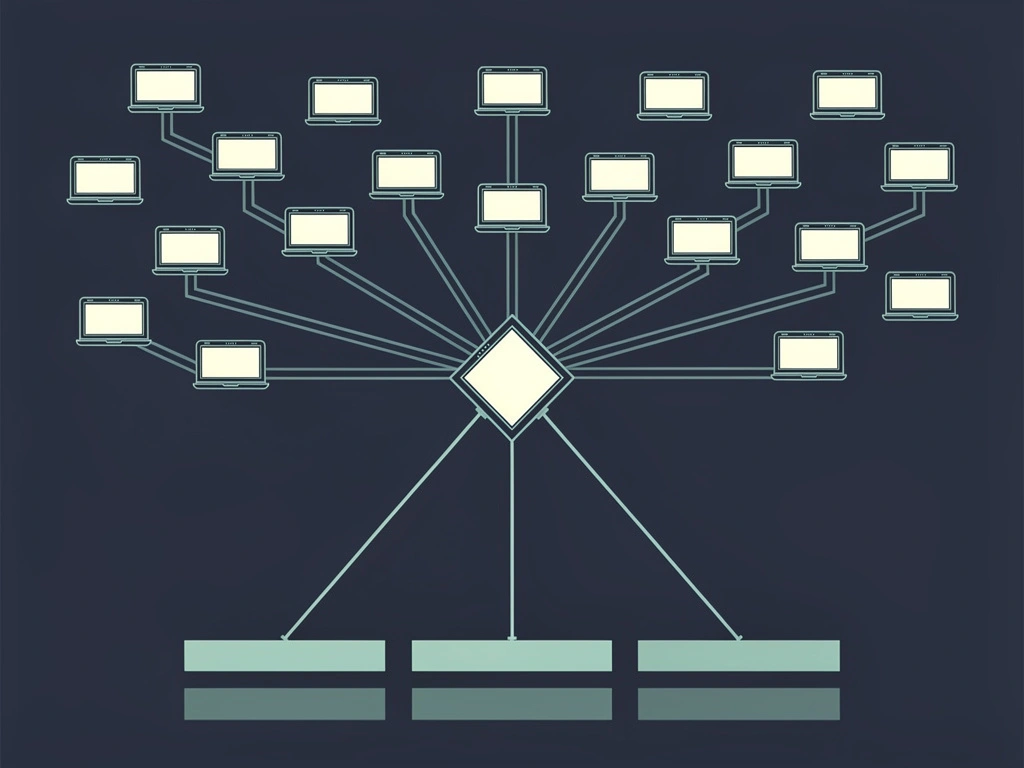
NuNet is a protocol, not a marketplace. Devices run the open-source Device Management Service and advertise capabilities to a libp2p gossipsub mesh. The Logical Orchestration Layer matches consumer workloads to providers via constraint satisfaction and dispatches the job to a containerised runtime. Payment settles peer-to-peer in NTX across Ethereum, Cardano and BNB Smart Chain, with stablecoins accepted as alternatives. The matching engine itself is Apache 2.0 — anyone can fork it.
What it does
NuNet is a protocol layer rather than a marketplace. Each participating device runs the Device Management Service, an open-source Go daemon that advertises capabilities (CPU, RAM, GPUGPUGraphics Processing Unit. Originally designed to render video game graphics, GPUs turned out to be exceptionally good at the massively parallel math that AI models need. Modern AI training and inference runs almost entirely on GPUs.Like a factory with 10,000 workers doing the same simple task in parallel, versus a CPU which is more like 10 workers each doing different complex tasks. AI training involves doing simple math a million times per second on a million numbers, which is exactly what the GPU factory is designed for.Read more →, geography, trust level) over a libp2p gossipsub mesh. The Logical Orchestration Layer matches incoming workloads to candidate devices via constraint satisfaction and dispatches the job to a containerised runtime. Each device and workload is an actor with a key pair; messages are cryptographically signed; the actor ID is the public key. Payment settles peer-to-peer in NTX on Ethereum, Cardano or BNB Smart Chain.
The project was incubated inside SingularityNET in 2018, incorporated as a standalone entity in August 2021, and shipped mainnet on 2 March 2026. Co-founders Dr Kabir Veitas (CEO and CTO), Dr Weaver D.R. Weinbaum, and Dr Ben Goertzel are all doxxed; Veitas runs day-to-day operations while Goertzel is now CEO of the Artificial Superintelligence Alliance. The dual-entity structure separates protocol stewardship from commercial operations: NuNet Foundation governs, NuNet Solutions builds.
One framing worth correcting up front. NuNet is sometimes described as the “remaining ASI Alliance compute leg” after Ocean Protocol’s October 2025 exit. That framing is wrong. The ASI Alliance lists three members: Fetch.ai, SingularityNET and CUDOS. NTX never migrated to FET. SingularityNET’s 2024 annual report describes NuNet as the “decentralised compute layer” supporting AGI infrastructure, not as a peer member. The SingularityNET Foundation retained 495,000 NTX from the 2021 spin-out (0.05% of supply) but has no governance control. Treat NuNet as infrastructure for SingularityNET, not as part of the ASI Alliance itself.
Value proposition
Apache 2.0 orchestration on libp2p
Device Management Service is open source on GitLab. Multi-chain NTX settlement on Ethereum, Cardano and BSC. Anyone can fork the matching engine.
Small and verifiable
32 connected devices reported on the homepage. Live dashboard returns HTTP 307 so the figure is self-reported only; the underlying claim is at least small enough to be plausible.
Token at the post-cycle low
Roughly $3M market cap, thin daily volume, fresh lows in June 2026. Current price is ~99% below the November 2021 ATH.
The pitch is architectural rather than commercial. Most compute marketplaces sit on top of a centralised orchestrator, take a cut, and sell decentralisation as a brand. NuNet inverts that. The orchestration layer is itself the open-source protocol. Anyone with the codebase can run a parallel matching engine. The Apache 2.0 licence on the Device Management Service and the NuNet Appliance makes that legally clean, and the libp2p mesh means there’s no central relay to gatekeep participation.
Multi-chain settlement is the second structural choice. NTX is deployed natively on Ethereum (about 631 million tokens), Cardano (about 369 million), and BNB Smart Chain. A consumer pays a provider in NTX on whichever chain both prefer. The protocol’s design explicitly accepts stablecoins and other settlement assets as alternatives, which solves an interoperability problem and creates an obvious tension for token holders: if the protocol works equally well without NTX, what is NTX for?
The counter-narrative is just as direct. At 32 connected devices, NuNet is two orders of magnitude smaller than Akash, io.net, Render or Aethir. The Auki/Posemesh and Serverista partnerships are reciprocally confirmed but produce no public workload volume or revenue. The dashboard at dashboard.orgs.nunet.network returns an HTTP 307 redirect on plain fetch, so the only quantitative network state the project publishes is the 32-device figure on the homepage itself. There’s an open question whether NuNet’s honesty on scale is a feature (no inflated metrics to discount) or a constraint (no scale to underwrite a revenue thesis). Right now, both are true.
Where NuNet fits on the compute shelf depends on what you weight. Against io.net’s 327,000 registered GPUs and 6,720 daily verified active GPUs from the 2024 Sybil hangover, NuNet’s 32 reported devices are smaller, but they aren’t padding a marketing claim. Against Aethir’s $127.8M self-reported revenue with closed-source code, NuNet’s invisible revenue with open-source code is a different trade. Against Gensyn, which shipped a token in April 2026 with the training mainnet still pending, NuNet has the inverse profile: mainnet live, token deeply post-cycle.
Tokenomics
NTX is a fixed 1 billion supply with no inflation and no minting beyond the cap. As of mid-May 2026, 86.57% is already circulating, with the on-chain Ethereum supply read matching the CoinGecko figure. (CoinMarketCap publishes a different number; the on-chain read is authoritative.) Most dilution is already behind. The next unlock is 2.54 million NTX on 6 June 2026, which is 0.25% of supply and is negligible.
Distribution, per the project’s published token overview:
- R&D reserve: 21.00% (foundation-controlled release; no public schedule)
- Team & advisors: 16.25%
- Mining rewards: 15.25% (released to compute providers as workloads execute)
- Private round: 14.40%
- Community round: 10.00%
- Community rewards: 9.00%
- Backers: 6.00%
- Liquidity provision: 3.50%
- Seed round: 2.60%
- Launchpads: 2.00%
Insider allocation (team plus private plus backers plus seed) totals 39.25%. Community-allocated supply (community rounds plus mining rewards) totals 34.25%. The R&D reserve at 21% is the largest single category and it’s the structural overhang to watch, because the release cadence is foundation-controlled and not published.
The NTX Ethereum contract was audited by Hacken OÜ in September 2021 (Solidity 0.6.2, MIT licensed, verified on Etherscan). The report found no critical, high, medium or low severity issues. Hacken itself recommended additional independent audits and a public bug-bounty programme as part of the standard audit conclusion. Neither has been publicly executed in the four years and eight months between that audit and the March 2026 mainnet launch. The orchestration protocol (Device Management Service, Logical Orchestration Layer) deployed at mainnet has no published independent audit at all.
The Ethereum NTX contract has burn, mint, pause and role-based-access-control features per the verified bytecode. No documented burns. No buyback. No fee-share to holders. The “small transaction fees fund network operations and development” language on nunet.io doesn’t specify whether protocol fees accrue to NTX holders or to the NuNet Foundation treasury. There is no staking, no validator yield, no compute-provider yield-share, and no governance voting (yet). Compute providers earn NTX from completed jobs. Passive holders earn nothing.
Market context: NTX is down approximately 99% from its all-time high of $0.2293 set on 30 November 2021. The $0.002906 all-time low cited at this review’s mid-May research date (set 5 May 2026) has since been broken: NTX fell to fresh lows around $0.002 by late June 2026. An ATL set during the write of the review and broken again within weeks tells you sell pressure is still active rather than priced in. Listed on MEXC, XT.COM, Uniswap V3 (Ethereum) and Minswap (Cardano). No tier-1 CEX listing. See live data above for current pricing.
How to participate
Hold NTX. No staking, no yield, no governance voting yet. Passive participation is purely directional. Liquidity on tier-2 CEXes (MEXC, XT.COM) and DEXes (Uniswap V3 on Ethereum, Minswap on Cardano) means positions above retail size face material slippageSlippageThe difference between the expected price of a trade and the price you actually get when the trade executes. Slippage usually goes against the trader and gets worse with bigger trades or thinner markets.Like trying to buy 1000 bananas at the corner shop. The first few are at the marked price, but by the time you've bought them all you've moved the price up because there are no more bananas left at the original level. The shop has to restock at higher cost.Read more →.
Run a Device Provider node. Install the open-source NuNet Appliance (Ubuntu 24.04 base; MacOS and Windows supported). Minimum 2 CPU cores, 8 GB RAM, 100 GB storage, stable internet. The DMS advertises the device’s capability profile to the libp2p mesh and earns NTX peer-to-peer when matched workloads execute. The Appliance scales from a Raspberry Pi to a 64-GPU data-centre rack on the same actor framework. At 32-device network size, earnings expectations aren’t yet benchmarkable. Documentation at docs.nunet.io/appliance/about.
Use as a consumer. Submit compute jobs via the REST APIAPIApplication Programming Interface. A structured way for one piece of software to talk to another. In DeAI, APIs let applications request inference from a model without running the model themselves.Like a waiter in a restaurant. You don't walk into the kitchen and cook your own meal. You tell the waiter what you want, they tell the kitchen, the kitchen cooks it, and the waiter brings it back. The API is the waiter.Read more → at 127.0.0.1:9999. The protocol performs dynamic constraint satisfaction across location, latency, hardware type, cost and trust without manual provider selection. No public pricing or cost calculator is published.
Build on the SDK. Apache 2.0 codebase on gitlab.com/nunet; GitHub is a secondary mirror. UCAN capability-token authorisation model. REST API documented at docs.nunet.io/docs/developer-documentation. No NuNet-specific grants programme; SingularityNET’s Deep Funding accepts adjacent proposals.
Governance. Currently off-chain via the NuNet Foundation plus a Technical Council. Phase 2 of the governance roadmap introduces liquid-democracy voting weighted by NTX holdings, with the option to delegate to another holder or to an AI agent. Phase 3 targets development outsourcing. Phase 2 is roadmap, not deployed; mainnet shipped without on-chain voting.
Honest assessment
What works
The codebase is fully open. Apache 2.0 across the Device Management Service, the NuNet Appliance and the dev-tools. MIT on the Ethereum NTX contract. The primary repository lives on gitlab.com/nunet (GitHub at github.com/nunet-io is a mirror with 5 followers, which understates actual activity). Anyone can fork the matching engine and run a parallel instance. That’s the architectural promise of permissionlessness, and unlike io.net or Aethir where the orchestration code is closed-source, NuNet actually delivers it.
Multi-chain settlement is operational. NTX trades and settles natively on Ethereum (~631M tokens), Cardano (~369M), and BNB Smart Chain. The Ethereum contract is verified on Etherscan with a clean Hacken audit on the token layer. The Cardano integration activated on 19 January 2026, six weeks before mainnet, with Eternl wallet support and recognition in the Cardano Foundation’s January 2026 monthly update.
Two production partnerships have reciprocal confirmation. Auki Labs published a partnership announcement on auki.com confirming joint node-deployment work within the NuNet Appliance for the Posemesh spatial-computing layer. Serverista’s integration was covered by Bitget News and describes NuNet’s Logical Orchestration Layer being used for dynamic VM workload distribution across data-centre infrastructure. Two reciprocally-confirmed partners is more concrete evidence than most early-stage compute protocols ship with, even before any revenue figure attaches.
The supply curve is the cleanest on the compute shelf. Fixed 1B cap with 86.57% already circulating. The next unlock is 0.25%. Compared to io.net (37.7% circulating, vesting through 2028) or Aethir (41.6% circulating, vesting through 2028), NuNet has the cleaner curve.
What doesn’t work
The audit gap is the headline weakness. The September 2021 Hacken review covered the token contract only and predates the orchestration protocol that shipped at mainnet. That’s a four-year-and-eight-month window between the only published audit and a live network handling peer-to-peer payments and containerised workloads. Hacken’s own report concluded with a recommendation for additional audits and a bug-bounty programme. Neither has been publicly executed.
Governance is fully foundation-controlled. No on-chain voting, no proposal register, no treasury transparency. The dual-entity structure (NuNet Foundation governs, NuNet Solutions operates) at least separates protocol stewardship from commercial interest, which is more than io.net offers, but it doesn’t substitute for an actual decision-making mechanism that token holders participate in. The Phase 2 liquid-democracy roadmap is appealing on paper. Until it ships, governance is one foundation board.
The token-utility model has a structural cap that the project itself describes openly. The protocol’s design accommodates stablecoins and other settlement assets, so NTX is the native asset but not the necessary one. Most live jobs probably do default to NTX, but the project is on record that they don’t have to. That’s honest. It’s also a permanent ceiling on the “NTX captures protocol throughput” thesis.
Network state is opaque. The 32-connected-devices figure on the homepage is the only quantitative network state the project publishes, and the underlying dashboard at dashboard.orgs.nunet.network returns HTTP 307 on plain fetch. There’s no public revenue, no transaction count, no compute-hours-delivered figure, no settlement-volume breakdown by chain. Project Catalyst funding documentation references 5,000 to 10,000 NTX transactions as an MVP success target, which is an honest acknowledgement of where the volume bar sits. Compare to Akash’s public Messari quarterly reports.
The risk
The structural risk is the supply pressure from the R&D reserve. 21% of supply sits in a foundation-controlled bucket with no published release schedule. At a $3M market cap, even a modest treasury draw covers operating costs for a meaningful runway, but it also sells into thin liquidity. The all-time low set nine days before this review (5 May 2026) suggests that pressure may already be playing out.
The narrative risk is dependency on SingularityNET, which is itself part of the ASI Alliance. The alliance’s governance has already been tested once: Ocean Protocol exited in October 2025 in a dispute settled with 286 million FET returned. NuNet’s separate token status (NTX, not migrated to FET) insulates it from analogous merger disputes. But if SingularityNET were to depart the ASI Alliance or wind down its NuNet integration, the most-cited consumer of NuNet infrastructure would be gone. Read that as a structural risk on the SingularityNET dependency; the codebase itself would survive.
The execution risk is timing. Mainnet shipped on 2 March 2026. Two and a half months in, the network has 32 reported devices, two reciprocally confirmed production partners, no public revenue, no governance voting, no working burn or fee-share, and a token at all-time-low. None of those gaps are technically blocked. All of them could be closed by the foundation. Whether they get closed before the supply overhang erodes patience is the question.
My position
Fact: NuNet ships an Apache 2.0 compute orchestration protocol with multi-chain NTX settlement, two reciprocally announced production partnerships, and a published 32-device network state.
Take: That’s the architecturally honest version of what most of the compute shelf is pretending to be. But “honest small” without a working burn, on-chain governance, or independent orchestration audit reads as a perpetual “show me” until the foundation closes those three gaps. At a microcap valuation with the all-time low freshly set, the option premium is cheap; the option’s exercise still requires the foundation to execute.
I don’t hold NTX. If the foundation ships an audit of the orchestration protocol, publishes a verifiable network dashboard with monthly settlement volumes, and turns the dormant burn capability into an actual fee-funded burn, the position would be reconsiderable. None of those are speculation; they’re things the foundation has the codebase, the team and the runway to do.
Freedom Score: 47/100
NuNet scores 47/100 (D grade). Full methodology at Freedom Score Methodology.
Infrastructure decentralisation (10/20): Device onboarding is permissionless: anyone can install the open-source NuNet Appliance and join the libp2p mesh. Settlement runs across Ethereum, Cardano and BSC, so no single chain is a single point of failure. The Logical Orchestration Layer (matching engine) is a single foundation-operated reference implementation, however, and the network’s verified size of 32 devices is too small to demonstrate geographic or organisational distribution. Apache 2.0 across the DMS means anyone could fork the matching engine, but no alternative implementation exists.
Governance decentralisation (5/20): All current decisions sit with the NuNet Foundation and Technical Council. No on-chain voting, no public proposal register, no treasury transparency. The Phase 2 liquid-democracy model is on the roadmap but not deployed; mainnet shipped on 2 March 2026 without it. Above fully-team-controlled DePIN peers because the dual-entity structure (Foundation governance plus Solutions operations) at least separates protocol stewardship from commercial interest.
Token distribution fairness (6/15): Insider allocation totals 39.25% (team and advisors 16.25%, private 14.40%, backers 6%, seed 2.60%). R&D reserve at 21% is unusually large and represents future foundation-controlled release with no public schedule. Community-allocated supply (community round 10% plus community rewards 9% plus mining rewards 15.25%) totals 34.25%, which is reasonable for a DePINDePINDecentralised Physical Infrastructure Networks. Protocols that use token incentives to coordinate real-world physical infrastructure like GPU compute, wireless networks, storage, mapping sensors, or bandwidth.Like crowd-sourced ride-sharing but for physical hardware. Uber incentivises drivers with dollars. DePIN incentivises hardware operators with tokens. The network grows because individuals choose to contribute capacity in exchange for rewards.Read more →. The token launched via IDOIDOInitial DEX Offering. A token launch mechanism where the initial sale happens directly on a decentralised exchange, with built-in liquidity pool funding. IDOs replaced ICOs as the standard launch model for many projects after 2018.Like opening a new shop directly inside an existing market hall instead of running a separate sale event. The shop is open, the market provides foot traffic, and customers can walk in and trade from day one.Read more → and launchpad rounds rather than fair launch.
Censorship resistance (9/15): Apache 2.0 codebase means the DMS can be forked and run by anyone. The libp2p P2P mesh has no central relay. Multi-chain settlement (Ethereum, Cardano, BSC) means a single chain censoring NTX transactions still leaves alternatives. No KYC required for device participation. The Foundation could choose to disable its reference matching engine, but the protocol’s open-source nature limits the blast radius of any single foundation action.
Data sovereignty (7/15): Workloads execute locally on provider devices in containers; no centralised aggregation of model weights or inputs. Cryptographic signing of every actor message provides integrity guarantees. There is no confidential-computeConfidential ComputeHardware-enforced computation where data and code are encrypted in memory and only the authorised application can access them. The machine's operator cannot read what the application is doing even though they own the machine.Like renting space in a bank vault. The bank owns the building and runs the security, but what you put in the vault is invisible even to the bank staff. Only you have the key.Read more → hardware support (no Intel TDX, SGXSGXIntel Software Guard Extensions. The first widely-deployed TEE technology, introduced in 2015. SGX creates encrypted memory regions (enclaves) where code and data are protected from the operating system and the machine's owner.Like a safe deposit box at a bank. The bank owns the safe room and can see who comes in and out, but they can't see what's inside the boxes. SGX gives applications a private box on a shared computer.Read more → or NVIDIA H100/H200 confidential containers as offered by io.net and Phala), so sensitive workloads are limited by what providers’ standard environments support. Metadata (job matching, payment) flows through the DMS reference implementation which is foundation-operated.
Open source and transparency (10/15): Device Management Service, NuNet Appliance and dev-tools are Apache 2.0 on gitlab.com/nunet. NTX Ethereum contract verified on Etherscan, MIT licensed. Whitepaper 2.0 published. The Hacken token-contract audit (September 2021) is publicly accessible. The four-year-eight-month audit gap between the only published audit and the 2 March 2026 mainnet launch is the headline weakness; the orchestration protocol deployed at mainnet has no published independent audit. Hacken itself recommended additional audits and a bug-bounty programme; neither was publicly executed.
Path to improvement
Three changes would materially raise NuNet’s Freedom Score:
- Audit the orchestration protocol. Commission a recognised firm (Trail of Bits, OpenZeppelin, Halborn or equivalent) to audit the Device Management Service and the Logical Orchestration Layer. The September 2021 Hacken token-contract review is not sufficient cover for a live mainnet handling peer-to-peer payments. Hacken’s own recommendation for additional audits has sat unactioned for four-plus years.
- Ship Phase 2 governance. Move the liquid-democracy voting mechanism from roadmap to live, with a public proposal register, on-chain treasury operations and transparent R&D reserve release scheduling. The dual-entity structure is a start; on-chain voting is the proof.
- Publish a verifiable network dashboard. The 32-device figure on the homepage should be cross-referenceable against a live, externally accessible network state page showing active devices by region, settled jobs over time, fee revenue by chain, and burn or treasury accumulation. Akash publishes quarterly Messari reports; NuNet currently publishes a homepage number.
Returns Score: 33/100
NTX scores 33/100 (F grade). Full methodology at Returns Score Methodology.
Token utility (9/20): NTX is the native settlement asset across Ethereum, Cardano and BSC with a network-access requirement for consumers and providers. The protocol’s blockchain-agnostic design accommodates stablecoins and other settlement assets, which caps but does not eliminate NTX-specific utility because most live jobs default to NTX. No staking yield, no governance voting yet, no fee discount for NTX-denominated jobs. Compute providers earn NTX from completed jobs; passive holders earn nothing. Below io.net (12/20) and Aethir (12/20), which have payment plus staking utility layers.
Value accrual (4/20): Burn capability exists in the Ethereum NTX contract per the verified Etherscan bytecode and protocol fees are designed to flow through, but no public burn cadence, no documented burns, no buyback programme and no fee-share to holders. The “small transaction fees fund network operations” language on nunet.io doesn’t specify whether fees accrue to NTX holders or to the NuNet Foundation treasury. Marginal credit for a designed-but-not-fired mechanism versus zero infrastructure.
Supply dynamics (12/20): Fixed 1B cap, no inflation, 86.57% already circulating. Most dilution is already behind. Next unlock is 0.25% of supply in June 2026 and is negligible. Better than the compute-shelf peers where most dilution remains: io.net 37.7% circulating, Aethir 41.6% circulating, Gensyn pre-cliff with 54.6% insider allocation. R&D reserve at 21% is the largest structural overhang because release cadence is foundation-controlled and not publicly scheduled.
Revenue sustainability (4/25): Mainnet 2.5 months old. No published fee or transaction-volume figure. Production workloads named (Auki/Posemesh, Serverista, HOMEPUTE369, NuNet Native) and two are reciprocally announced from the partner side, which is more credit than self-claim alone. Project Catalyst documentation references 5,000 to 10,000 NTX transactions as an MVP target. No DeFiLlama or Token Terminal listing for fees. Similar to Gensyn (2/25, prediction-market fees nominal); well below Aethir (17/25, $127M self-reported) and io.net (15/25, $20M self-reported).
LiquidityLiquidityHow easily a token can be bought or sold without moving the price. High liquidity means you can enter or exit large positions quickly at the quoted price. Low liquidity means even small trades can swing the market.Like the difference between selling a house and selling a share of Apple stock. The house might be worth more on paper, but finding a buyer at that price takes weeks. The Apple share converts to cash in one click.Read more → and access (4/15): Approximately $3M market cap with thin daily volume per CoinGecko on the research date. Down ~99% from the November 2021 ATH; the 5 May 2026 ATL has since been broken (fresh lows in late June 2026), indicating active sell pressure rather than a stable post-cycle base. Listed on MEXC and XT.COM (mid-tier CEXes) plus Uniswap V3 on Ethereum and Minswap on Cardano. No tier-1 CEX (Binance, Coinbase, Kraken) listing. Positions above $10k face material slippage on most venues.
Path to improvement
Three changes would materially raise NTX’s Returns Score:
- Turn on the burn. The Ethereum contract has burn capability. Implement a publicly auditable monthly burn funded by protocol fees, with on-chain proof of every burn. This is the single most powerful signal that NuNet’s revenue flows to NTX holders rather than to the foundation treasury.
- Publish revenue data. Settlement transactions on Ethereum and Cardano are on-chain; a Messari-style quarterly report listing settlement volume by chain, fees collected, and net-of-emission yield to providers would let the market price the network on revenue rather than on hope.
- Earn a tier-1 CEX listing. MEXC and XT.COM are not the same liquidity tier as Binance or Coinbase. Listings follow revenue, audits and governance maturity. The other two paths-to-improvement above are prerequisites; the listing is the trailing indicator.
Score change log
| Date | Score | Change | Reason |
|---|---|---|---|
| 2026-08-19 | Data | N/A | Correction. Two hardcoded market caps removed from the verdict and the Take, and a relative time reference (“nine days ago”) replaced. No score change. |
| 2026-08-15 | Data | N/A | Circulating supply de-hardcoded: absolute token count removed from the TokenFactsStrip context, percentage refreshed to 86.58% (CoinGecko). No score change. |
| 2026-08-12 | Data | N/A | WS3 on-chain reconciliation (1->4 verdicts). 3-chain total matches ~1B but the cap is not code-enforced: the Ethereum NuNetToken has an uncapped mint() held by the bridge and a bare un-renounced deployer EOA that also holds pause + role-admin (supply_dynamics + token-admin established). Open-source confirmed (GitLab + Apache-2.0 DMS; match). Scores unchanged. |
| 2026-06-26 | Data | N/A | DefiLlama LlamaAI harvest cross-check, verified independently (CoinGecko + api.llama.fi). The snapshot noted LlamaAI treats our review as the authoritative tiebreaker for circulating supply over the conflicting aggregators; confirmed our ~866M (86.57%) holds exactly (CoinGecko 865.8M). Refreshed the ATH decline to ~99% (verified -99.1% from $0.2293, 30 Nov 2021). The $0.002906 all-time low cited at the May research date has since been broken: NTX fell to fresh lows around $0.002 by late June 2026, which reinforces (rather than changes) the active-sell-pressure thesis. No score change. |
| 2026-05-14 | Both | N/A | Initial publish. Freedom 47/100 (D), Returns 33/100 (F). Triage framing corrected: NuNet is the SingularityNET ecosystem’s compute layer, not a peer ASI Alliance member. |
Team overview
AI researcher and software architect; PhD in Interdisciplinary Studies (2019), Master's in AI (2009). Previously AI researcher at SingularityNET and management consultant. Public-facing CEO since incorporation; appears in 2026 podcast and roadmap content. Contact: [email protected].
https://www.linkedin.com/in/vveitas/M.Sc. Electronics and Computer Engineering (Tel Aviv University). Intellectual contributor to the 'Open Ended Intelligence' concept; previously at Vrije Universiteit Brussel. Less publicly visible than Veitas but listed as a named co-founder on nunet.io/about.
Founder of SingularityNET (2017); CEO of the Artificial Superintelligence Alliance since the March 2024 merger; OpenCog Hyperon principal investigator. Originator of the 'Artificial General Intelligence' term; 150+ research publications. Active in NuNet roadmap discussions but no longer in day-to-day NuNet operations.
https://www.linkedin.com/in/bengoertzel/| Round | Amount | Date | Lead |
|---|---|---|---|
| Spin-out / IDO | $5.5M | 2021-08-01 | SingularityNET Foundation (incubator) |
Source: OYM Research · Last updated 2026-08-24
Technical snapshot
NuNet is a protocol layer rather than a marketplace. Devices run the Device Management Service (DMS) — an open-source Go daemon — which advertises capabilities (CPU, RAM, GPU, geography, trust level) over a libp2p gossipsub mesh. The Logical Orchestration Layer matches incoming workloads to candidate devices via constraint satisfaction and dispatches the job to a containerised runtime. Each device and workload is an actor with a key pair; messages are cryptographically signed; the actor ID is the public key. Payment settles peer-to-peer in NTX on either Ethereum or Cardano, with BNB Smart Chain as an additional deployment. The protocol is blockchain-agnostic by design and accepts stablecoins or other settlement assets as alternatives to NTX.
Commit Activity
Community
Audits
Scope: NTX token contract (ERC-20) code review and security analysis
No critical, high, medium or low severity issues identified. Methodology: code functionality review, manual audit, Mythril and Slither automated checks. The report explicitly recommends additional independent audits and a public bug-bounty programme.
View reportSource: OYM Research · Last updated 2026-08-24
Tokenomics deep dive
Token utility
- Required for network access by consumers and providers
- Peer-to-peer settlement for compute jobs (alternatives: stablecoins, other settlement assets)
- Protocol fees in NTX fund network operations
- Planned (Phase 2 governance): liquid-democracy voting for protocol decisions
Supply
| Max supply | Total supply | Circulating | Circ. % |
|---|---|---|---|
| 1,000,000,000 | 1,000,000,000 | 865,718,742 | 86.57% |
Allocation
Method: Spin-out from SingularityNET in August 2021 with IDO and launchpad rounds; multi-chain deployment (Ethereum, Cardano, BSC)
| Category | % | Vesting | Cliff |
|---|---|---|---|
| R&D reserve | 21% | Foundation-controlled release; schedule not publicly disclosed | -- |
| Team & advisors | 16.25% | Cliff plus linear vest; specific schedule not disclosed | Disclosed as 'cliff mechanism with differential schedules per category' |
| Mining rewards | 15.25% | Released to provider devices as workloads execute | -- |
| Private round | 14.4% | Cliff plus linear vest; specific schedule not disclosed | Disclosed |
| Community round | 10% | Mostly unlocked at TGE | -- |
| Community rewards | 9% | Programmatic release | -- |
| Backers | 6% | Cliff plus linear vest | Disclosed |
| Liquidity provision | 3.5% | Released for DEX/CEX market-making | -- |
| Seed round | 2.6% | Cliff plus linear vest | Disclosed |
| Launchpads | 2% | Mostly unlocked at TGE | -- |
Emissions
Vesting timeline
Scheduled token unlock per CoinGecko vesting page
Private round cliff
Backers cliff
Seed round cliff
Team & advisors cliff
Not applicable (fixed cap)
1B fixed cap with most dilution already in circulating supply (86.57% as of 2026-05-14). The R&D reserve (21%) is the largest single overhang. ATL was set on 5 May 2026, nine days before this research date, suggesting active sell pressure rather than a stable post-cycle base. The protocol's blockchain-agnostic design (stablecoins and other assets accepted for settlement) is a structural cap on NTX-specific utility.
Source: OYM Research · Last updated 2026-08-24
Participation at a glance
Run a Device Provider node by installing the open-source NuNet Appliance (Ubuntu 24.04 base; MacOS and Windows supported). The Device Management Service advertises the device's capabilities to the libp2p mesh and earns NTX peer-to-peer when matched workloads execute.
Submit compute jobs as a consumer by deploying to an orchestrator node. The protocol performs dynamic constraint satisfaction across location, latency, hardware type, cost and trust without manual provider selection.
Build against the Device Management Service REST API (default 127.0.0.1:9999). Apache 2.0 codebase on gitlab.com/nunet; capability tokens use the UCAN model.
Currently off-chain via the NuNet Foundation and Technical Council. Phase 2 of the governance roadmap introduces liquid-democracy voting weighted by NTX holdings; not yet deployed.
Developer resources
Source: OYM Research · Last updated 2026-08-24
Usage and traction
Data from: nunet.io homepage scrape 2026-05-14; CoinGecko market page 2026-05-14 (2026-05-14)
Production workload claims are partially reciprocally verified (Auki/Posemesh and Serverista) and partially self-reported (HOMEPUTE369, NuNet Native). The 32-device figure is the only quantitative network-state metric the project publishes; the underlying dashboard is not accessible for cross-check. Project Catalyst funding documentation references 5,000-10,000 NTX transactions as an MVP success target, indicating early-stage volume expectations.
Source: OYM Research · Last updated 2026-08-24
Community
Governance
Foundation governance (NuNet Foundation) plus Technical Council. Phase 2 roadmap introduces liquid-democracy voting weighted by NTX holdings. Phase 3 targets dev outsourcing. View →
Sentiment
Small but technically engaged community. Discord size (~3.1k) is small relative to peers in the compute-marketplace shelf (Akash ~50k+, io.net ~100k+). Engagement skews technical rather than speculative, consistent with a project that went 5+ years from incubation (2018) to mainnet (March 2026).
Source: OYM Research · Last updated 2026-08-24
Sources consulted (25)
Read next
Project review
Golem Network
Golem Network review. The original decentralised compute network (2016). Permissionless P2P marketplace, 82% ICO distribution, zero protocol revenue. Freedom Score and honest assessment.
Project review
Render Network
Independent Render review. Hollywood studios, OctaneRender demand, and OTOY's central control. RENDER tokenomics, BME burns, and the freedom trade-off.
Project review
Aethir
Aethir review. Enterprise GPU compute network for AI and cloud gaming. Aethir node setup, ATH token, $127.8M revenue, Freedom Score and honest assessment.